Showing posts with label book review. Show all posts

Wednesday, August 20, 2008

Review: Between Silk and Cyanide

I just posted a review of this book to GoodReads. Enjoy:


Between Silk and Cyanide: A Codemaker's War, 1941-1945 Between Silk and Cyanide: A Codemaker's War, 1941-1945 by Leo Marks


My review


rating: 5 of 5 stars
This was a fascinating book about Leo Marks' experience in the codes division of the SOE, the British organization responsible for handling spies during the second world war. Not only do we get to find out a lot about the mechanics of how it all worked, what the codes were, and the British side of the Englandspeil/Nordpol game with Col. Giskes, but we also get some insight into the personalities and culture that allowed the SOE to be, at the same time fantastically successful in managing some spy networks and profoundly abstruse about recognizing and remedying their own mistakes.

For instance, Marks was a master at deciphering coding mistakes by stressed out agents and saved many lives by not requiring them to resend messages coded with the same key, etc. He would take bathroom breaks to solve 'indecipherables' and reencode them properly in such a way that the Free French would not realize that he had cracked their precious code, but at the same time saving their agent.

However, his own narrow focus and the turf wars of those around him allowed the Germans to capture dozens of agents and tons of airdropped supplies. Read London Calling North Pole for an account by the German colonel in charge. It was frustrating to think of how many lives could have been saved or how much more quickly the war might have ended if some of the British officers had been less concerned about their own fiefdom and more concerned about a common cause. We are left wondering what might have happened if there had been a spirit of cooperation instead of competition between the geniuses at Bletchley Park and those at SOE codes section.

All in all, I recommend this as a fascinating character study of a civilian in the war effort. It is full of interesting stories and anecdotes, and should be accessible to a general audience. However, those with an understanding of and appreciation for cryptography and espionage will especially enjoy this book.


View all my reviews.

Sunday, June 8, 2008

Chatter, a Review

If I haven't posted for a while, it's a consequence of being in that "all but dissertation" phase and being between semesters. Expectations are high that I would get a lot of research done. Alas, blogging takes the back seat...

In any case, tonight I finished reading a book Hannah got me for the first of m 34th birthdays. (I'm planning to hang out at 34, an entirely respectable age, for as many years as I may before conceding to 35 for several more.) The book is by a high school classmate of hers named Patrick Radden Keefe and it's called Chatter:Uncovering the Echelon Surveillance Network and the Secret World of Global Eavesdropping. The title pretty much tells you what it's all about.
I suspect that the word Echelon in the title is a bit of an attention grabbing device, since the book is not really about Echelon so much as the NSA, its eavesdropping network, and a history of its sucesses and failures.
Most Americans, including me before reading this book, don't have much of a clue about the extent of listening in that our government does. Apart from some awareness about the recent warrantless wire-tapping done by the NSA, we really only have at vague sense of unease that our privacy may be just an illusion. Keefe goes to some lengths to describe in as much detail as possible through public domain sources all of the eavesdropping activity that we unwittingly finance through our tax dollars. In various chapters he describes the infrastructure of eavesdropping; our international security partnership with the UK, Canada, Australia, and New Zealand; the lives of several insiders who went public; the crusades of several outsiders who research the eavesdroppers and report on their activities; the responses of foreign governments to our eavesdropping; and some very insightful discussion about the benefits of signals intelligence as well as its shortcomings, failures, and the abuses it allows.
Keefe likes to point out that there has been remarkably little public will to discuss the trade-offs between security and liberty. There have been several remarkable failures of intelligence, including most notably September 11th, the attacks on our embassies, and the attack on the USS Cole. Amazingly, our usual response to these failures has been to not hold anyone accountable, and increase funding for the agencies responsible for the failures.
This was quite an eye-opening read, and thankfully, Keefe steers well clear of any paranoid raving. Much of what is written in the public domain about Echelon is unashamed paranoid raving. Just Google "Echelon" and count the references to Orwell to see what I mean. In my opinion Keefe does a good job of informing without opining too much. His main grief seems to be that we in the public seem too apathetic to have much meaningful discussion about where the line between liberty and security should be drawn.
I recognize that my skill as a book reviewer is falling somewhat short in this post, and this is a difficult book to do justice to. That said, it is quite readable and will not fail to keep you turning the pages. I would recommend giving it a read, especially in the run up to the elections since we are sure to hear a lot of rhetoric about security and freedom in the debates this fall. Click the cover shot below for a link to the Amazon page for this book.

Wednesday, March 26, 2008

Book Review: Blind Man's Bluff

Blind Man's Bluff: The Untold Story of American Submarine Espionage, by Sherry Sonntag and Christopher Drew.
I was at the library the other day, and having just finished reading Master and Commander, by Patrick O'Brian, I was in a little bit of a naval mindset and was looking for info on sailing ships, and there sat this book. The title and subject grabbed my attention, as they were clearly designed to do, and since there is no cost involved in a library check-out, I brought it home with me.
Halfway through the first chapter, it started to seem very familiar to me, and then it donned on me that exactly the same thing happened about five years ago on a trip to the library when we lived in South Carolina. It turns out I've read the book before! Weird, huh? Anyway, I've read enough of it now to offer an intelligent opinion, and anyway, I want to try out the Amazon associates link.
This is one of those books which uncovers a previously hidden part of American history, which is the submarine aspect of the cold war. The chapters in fact focus mostly on the disasters and near disasters in the U.S. submarine service, starting from the early dare-devil days of the diesel subs up through the modern nuclear boats. I don't think most people realize that there were a lot of lives lost in the cat-and-mouse game that we played with the Soviets during the Cold War. At various times, destroyers rammed subs and damaged or sank them, subs accidentally bumped into each other, and both American and Soviet subs popped their periscopes up in the middle of busy enemy naval bases. In one high-profile case, the Soviets discovered a "property of US Govt."-labeled wire-tap on one of their undersea communications cables. Oops!
There were also technological feats as impressive (and nearly as expensive) as the Apollo space program that had to remain shrouded in secrecy. In fact, mere days before the Apollo 11 moon landing, the U.S. Navy was operating a deep-sea recovery vehicle in and around a submarine wreck which was under two miles of water. And they weren't allowed to tell anyone about it. How's that for a fine use of tax dollars?
While the stories are interesting and the tales are compelling, I've found a few too many style errors to be able to give this a whole-hearted endorsement. Several times, the authors switch from present voice to past mid-paragraph. At times the authors' opinions about mistakes by the Navy and various departments come through a little too clearly, and the tone starts to sound whiney. If you happen to be in the Tom Clancy fan-camp, these issues will not bother you in the least, and I can heartily recommend this book to you, since this has the added benefit of all being true. For the rest of you (my wife for instance), if you care overmuch about style and good writing, be forewarned: this is by no means the worst I've ever read, but this will not contend for space on the shelves of great literature.
Thanks for reading!


Monday, January 14, 2008

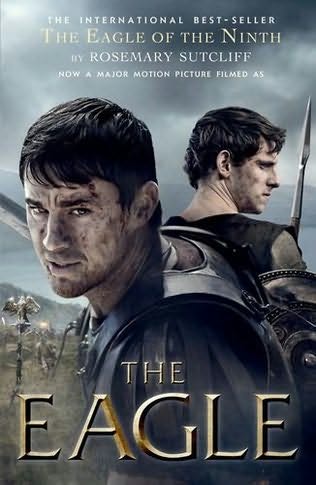
Eagle of the Ninth: A Review


Hannah or I have been reading with Ian from a chapter book most every night for the last couple of years. I have enjoyed reading The Hobbit, Treasure Island, the Chronicles of Narnia, and the Three Investigators with him, and Hannah has tackled, among others, A Door in the Wall, Shadow Spinner, The Miraculous Journey of Edward Toulane, and The Tale of Desperaux.
Well recently, we finished reading Rosemary Sutcliff's Eagle of the Ninth, and I think this has been among my favorite books. IMHO, it's unfortunate that this is so often labeled under "Junior Classics" or some other such moniker, because the writing and thematic content is so much better and so much deeper than a lot of other adult fare that I've choked down. This book, while having enough action and strength of plot to keep a busy seven year old engaged, is also a fine piece of literature that is thoroughly enjoyable to a more discriminating reader.
The story is set in the early second century, A.D. amid a tense period in Roman-Briton relations. The Roman Empire had recently retreated behind Hadrian's wall, and the province of Valentia was abandoned to the tribes. When Marcus, our protagonist, is assigned to command a garrison on the frontier, he is thrown into the midst of the cultural conflict. With the backdrop of his father's legacy and under the shadow of disgrace cast by the lost Ninth Hispania legion his father commanded, the burden on Marcus to succeed in the Legions in heavy on him. His developing relationship with a local hunter foreshadows many of the themes developed later throughout the narrative: the cultural tension between Roman and Briton, the need for redemption and purpose, and the freedom and danger of the wild, free North. These themes are developed at length through his relationships with Esca a slave-gladiator, a wolf cub, and Cottia a local girl, each of whom affects him profoundly and transforms him significantly. His first encounter with the locals eventually deals Marcus a crippling wound which takes him out of the Legions and into a dark period of restlessness and uncertainty which ultimately lead him on a quest to recover the lost Eagle of the Ninth Legion. While historically, we know the end result of his quest, and this removes some of the tension from certain scenes, the journey is exciting, complex, and beautiful all at once.
Sutcliff uses a lot of imagery and displays sometimes stunning word choice. One of my favorites finds Marcus and Esca alone in the wilds of Caledonia:
It was an evening coloured like a dove's breast; a little wind feathered the shining water, and far out on the dreaming brightness many scattered islands seemed to float lightly as sleeping sea-birds.
Several times, I had to stop and reread a section to savor the words. Out loud. To Ian (who was rolling his eye's I'm sure). Actually, he really got into it, and we had a lot of fun looking up some of the historical places and discussing the plot together. There was a brief exception to the enjoyment at the end when he was channeling the kid in The Princess Bride, bemoaning the possibility of a kiss, but if he rereads it in the future, it will no doubt be a different book for him then, and he may change his mind about that part. In any case, I'm sure I'll reread this book, and I highly recommend it to any who appreciate good writing and a good story.